
Historic Agreement: Federal Government Adjusts Food Allowance by 17.5% for Public Servants
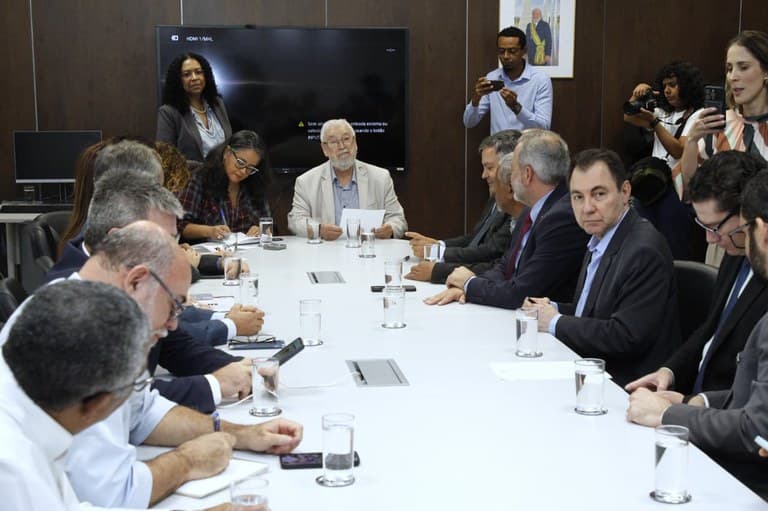
Historic Agreement: Federal Government and Employee Associations Adjust Food Allowance by 17.5%
In a significant milestone for federal public servants, the Federal Government and various employee representative associations have signed a new agreement establishing a substantial adjustment of 17.5% in the food allowance. This measure has increased the monthly value of the benefit to R$ 1,000.00, demonstrating the government’s commitment to valuing and improving the working conditions of federal public servants.
The announcement and formalization of this agreement are direct results of the constructive and ongoing dialogue maintained within the Permanent National Negotiation Table (MNNP). Since 2023, this fundamental benefit for workers’ purchasing power has already accumulated an impressive increase of 156.55%, highlighting the priority given to salary recovery and the financial condition of these professionals.
Details of the Adjustment: Food Allowance and Participation in Supplementary Health
The new agreement, formalized on November 6, 2025, during the 24th Meeting of the Permanent National Negotiation Table, had the following main points:
- Food Allowance: The value of the food allowance, which was R$ 658.00, was adjusted by 17.5%, increasing to R$ 1,000.00 per month.
- Union Participation in Supplementary Health: The adjustment in the Union’s participation in the health plan of the servants was also agreed. The benchmark value per capita for the supplementary health benefit, which was R$ 145.00, had a significant increase of 51%, rising to R$ 215.00 per person.
It is important to note that these values will take effect from May 1, 2026. This deadline allows for the necessary budgetary planning and reinforces the guarantee of the implementation of the increases.
Financial Impact and Scope
The total estimated budgetary impact for the implementation of these adjustments is approximately R$ 3 billion over two years (2025-2026). This value demonstrates the magnitude of the investment made by the government in valuing civil servants. The measure will benefit a wide range of workers, which includes:
- Active servers (approximately 520,000).
- Retirees (approximately 470,000).
- Pensioners (approximately 280,000).
This totals approximately 1.27 million beneficiaries, who will have their living conditions and purchasing power improved with the implementation of these increases.
Valuation History: A Look Since 2023
Since the beginning of the current government, in 2023, the policy of valuing federal servants has been a priority. In May 2023, there was a 9% adjustment in the remuneration of all servants, in addition to a 43.6% increase in the food allowance, which increased from R$ 458.00 to R$ 658.00. Adding the adjustments from 2023 and the newly agreed ones for 2025/2026, the food allowance will have an accumulated increase of 156.55%, going from R$ 458.00 to R$ 1,000.00.
This sequence of adjustments to the food allowance represents a continuous effort by the government to make up for inflationary losses and improve the quality of life of civil servants, an essential pillar for the efficiency of public services provided to the population.
The Role of the Permanent National Negotiation Table (MNNP)
The Permanent National Negotiation Table (MNNP) continues to be the main forum for dialogue between the Federal Government and employee class entities. Inaugurated in 2003 and reopened in 2023 after a period of inactivity, the MNNP has been fundamental in building consensus and formulating policies that meet the needs of both workers and the State. Its performance ensures that the demands of civil servants are heard and negotiated in a transparent and democratic manner.
The Secretary of Labor Relations, José Lopez Feijóo, highlighted the importance of this agreement as a “win-win” process:
“It is a proposal that brings benefits, especially in matters relating to benefits, both in supplementary health and food. At the same time, it does not burden the public budget this year, but from next year onwards. It is a win-win process for the government and for public servants. This dialogue and the collective construction of the Negotiation Table allow us to advance more and more. It is a historic milestone. We are managing to build a process of valuing and recognizing the servants of Brazil.”
This perspective reinforces the idea that strengthening relations between the government and civil servants is beneficial for the entire society, resulting in a more motivated and efficient public service.
Next Steps and Expectations
With the agreement signed, it is expected that the implementation process will proceed without disruptions, ensuring that federal servants receive the new values within the stipulated deadlines.
For the future, the continuation of dialogue in the MNNP is crucial to address other important topics for civil servants, such as career restructuring, equity policy, and improving working conditions for all professionals in the federal public service. The expectation is that this stance of permanent negotiation will continue to yield positive results, strengthening the relationship between the State and its servants and, consequently, improving the quality of services provided to the Brazilian population.