
STF suspends proceedings on equal contribution time for men and women in supplementary pension plans
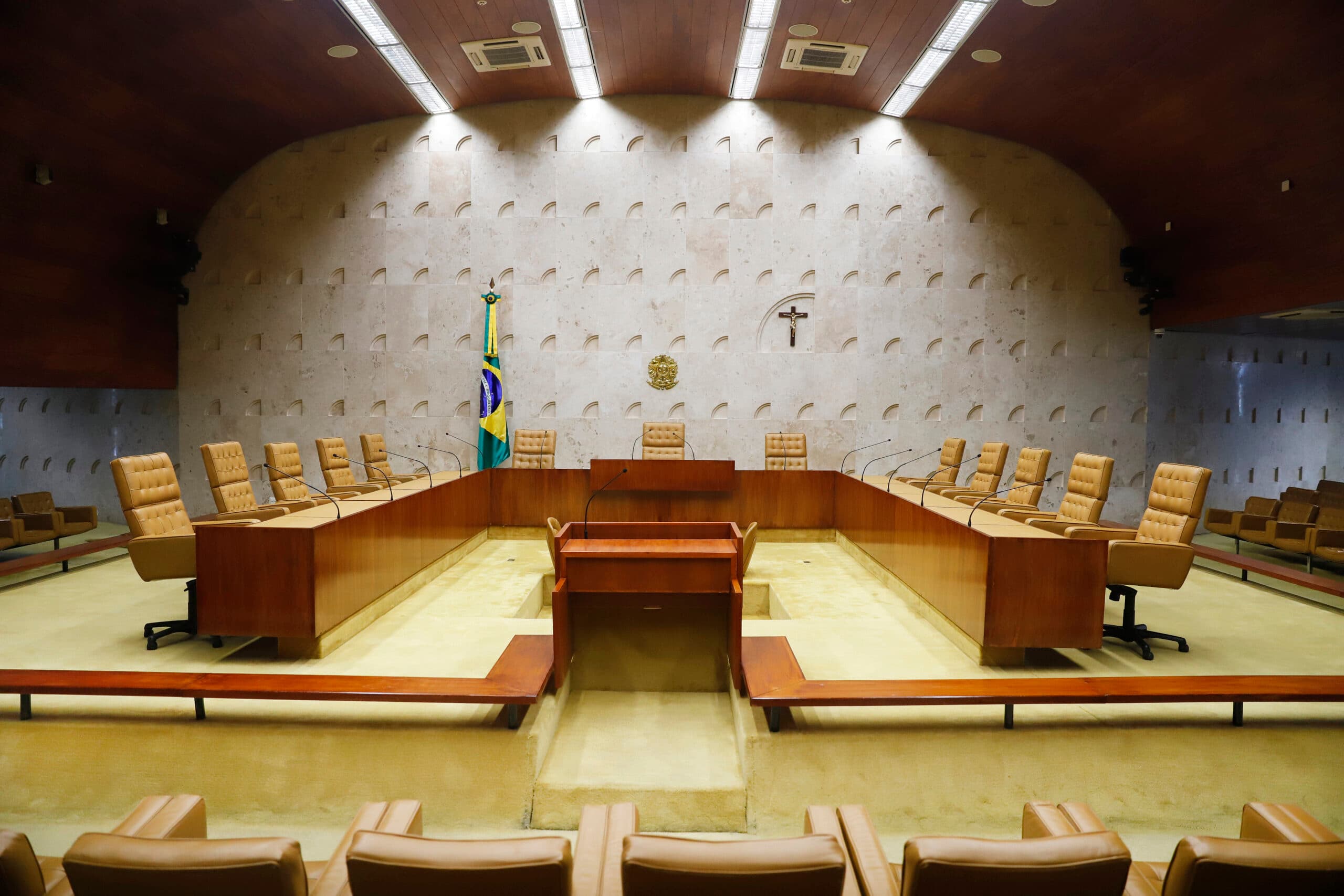
The Federal Supreme Court (STF) has just ordered the national suspension of all proceedings discussing the legality of clauses in supplementary pension plans that establish the same contribution time for men and women. The decision, which occurs under the general repercussion procedure, highlights the conflict between formal equality and material justice in the Brazilian private pension system.
The Decisive Framework: General Repercussion Theme 1.423
The decision was consolidated in the judgment of Extraordinary Appeal (RE) No. 1,415,115. By recognizing the existence of general repercussion to the matter, now cataloged as Theme 1.423, the STF signals that the resolution of this conflict will not only impact the parties involved in the original process, but thousands of pension fund beneficiaries across the country.
The rapporteur of the case, Minister Alexandre de Moraes, emphasized the need to halt the ongoing actions in the lower courts. This national suspension is a strategic procedural tool to prevent different courts from issuing conflicting decisions, which could generate extreme legal uncertainty for supplementary pension entities and their participants.
The Controversy: Equality of Time vs. Social Reality
The core of the dispute lies in pension fund regulations that require 30 years of full contribution for both men and women. The plaintiffs argue that applying a “one-size-fits-all” rule for both genders ignores the historical and structural disparities of Brazilian society.
Historically, the General Social Security Regime (RGPS/INSS) and the Special Regime (RPPS) adopt differentiated criteria. This differentiation is based on widely documented sociological and economic assumptions:
- Double workload: The recognition that women still assume the greater burden of domestic and family care.
- Wage inequality: IBGE data proving that women, on average, earn less than men in the same roles.
- Barriers in the labor market: The penalization of maternity in career progression.
The Logic of Distortion in Supplementary Plans
One of the most sensitive points of the discussion refers to the nature of “supplementation”. If women retire with reduced time in the INSS, but the supplementary plan requires 30 years for the maximum benefit, there is a financial mismatch. Many women have to choose between continuing to work only to reach the private pension goal or retiring through the INSS and receiving a reduced (proportional) supplementary allowance.
“The application of an identical contribution time criterion in supplementary systems can, paradoxically, deepen the inequality that the public pension system tries to mitigate, punishing women for a rule that does not observe their structural vulnerability.”
Formal Equality vs. Material Equality
The judgment in the STF should revisit fundamental concepts of Constitutional Law:
1. Formal Equality
From this perspective, everyone is equal before the law and should be subject to the same rules. Supplementary pension entities often argue that, because they are voluntary and based on rigorous actuarial calculations, they should not suffer the same interference from social policies as the public regime.
2. Material (Substantial) Equality
This concept argues that the Law must treat the unequal to the extent of their inequality. Treating people who face different realities in the labor market in the same way would, ultimately, consolidate an injustice.
Actuarial and Financial Impacts
Private pension entities express concern about the actuarial balance of the plans. If the STF decides that the contribution time for women should be less, the calculations of mathematical reserves and monthly contributions may need to be revised. This could increase the cost of the plans or require extraordinary contributions from sponsors and participants.
On the other hand, participants argue that the financial sustainability of the fund cannot be maintained at the expense of violating fundamental rights and constitutional principles of equality.
What to expect for the future of the proceedings?
With the national suspension in effect, all proceedings in the Brazilian Judiciary on this issue will be halted until the STF Plenary issues a final decision. There is no exact date for this judgment, but given the nature of the general repercussion, the fixed thesis must be followed by all judges and courts in the country.
Conclusion
The outcome of Theme 1.423 will be a watershed for Brazilian Pension Law. It will define whether the autonomy of closed supplementary pension entities has limits before the principle of gender equality. While we await the decision, the recommendation for beneficiaries and lawyers is to rigorously monitor the procedural updates, as any retroactive or modulated decision may drastically alter the retirement planning of thousands of Brazilian women.